Where Art Meets the Jungle: Tulum’s Soulful Shopping Scene
You know that feeling when you stumble upon a place where every handmade bracelet, woven bag, and painted tile tells a story? That’s Tulum. Far from generic souvenir stands, its shops blend Mayan heritage with bohemian spirit, turning shopping into a cultural journey. I walked those sandy paths between boutiques and open-air markets, stunned by how deeply art and identity shape every purchase. This isn’t just retail—it’s connection, creativity, and conscience all wrapped in one.
The Spirit of Tulum: More Than a Beach Destination
Tulum was once a quiet stretch of white sand along the Caribbean coast, known only to a few travelers and local fishermen. Over the past two decades, it has transformed into a global destination, yet it has managed to preserve its soul in a way few places can. Unlike other resort towns that have surrendered to mass tourism, Tulum has evolved with intention. Its architecture, cuisine, and commerce remain deeply rooted in Mayan traditions, even as modern influences gently weave through. This balance is not accidental—it’s a reflection of a community that values authenticity, sustainability, and cultural continuity.
What makes Tulum unique is how its artistic identity emerges from a deep respect for nature and ancestral knowledge. The town sits on land that was once part of a vast Mayan network of trade and spiritual practice. Today, that legacy lives on in the way local artists approach their craft. Materials are chosen with care—cotton grown without chemicals, dyes derived from plants like achiote and indigo, wood reclaimed from fallen trees. Every piece carries the imprint of the earth and the hands that shaped it. This isn’t just about aesthetics; it’s about honoring a worldview where humans are part of nature, not separate from it.
Sustainability is not a buzzword here—it’s a way of life. Many shops operate off-grid, using solar power and rainwater collection systems. Packaging is minimal and biodegradable. Even the layout of the town encourages slow living: narrow pathways invite walking, bicycles outnumber cars, and open-air markets thrive under the shade of palm trees. In this environment, shopping becomes a mindful act. You’re not rushing through fluorescent-lit malls; you’re moving at the pace of the jungle, pausing to touch a handwoven textile or listen to a vendor explain how her grandmother taught her to spin thread.
Because of this, shopping in Tulum feels fundamentally different. It’s not transactional. It’s relational. You’re not just buying a product—you’re engaging with a story, supporting a family, and participating in a tradition that stretches back centuries. The values embedded in each item—respect for nature, reverence for heritage, commitment to community—make every purchase feel meaningful. In a world where so much is mass-produced and disposable, Tulum offers a powerful alternative: a reminder that beauty can be slow, ethical, and deeply human.
Aldea Zama: Where Culture Wears Its Heart on the Street
One of the most enchanting corners of Tulum is Aldea Zama, a residential neighborhood that feels more like a living village than a tourist district. Lined with cobblestone paths, flowering hedges, and open-air courtyards, it offers a peaceful contrast to the busier beach road. Here, shopping isn’t about crowded storefronts or loud signage. Instead, it unfolds in small, family-run boutiques tucked between homes and gardens. Each shop feels like a personal invitation—an artist opening their home to share their craft.
Walk through Aldea Zama, and you’ll encounter a rich tapestry of handmade goods. Ceramicists display vases and bowls shaped by hand, their surfaces etched with symbols from Mayan cosmology. Textile artists hang huipiles—traditional embroidered blouses—on wooden racks, each one a vibrant narrative of identity and place. Jewelry makers offer necklaces strung with seeds, shells, and stones, often arranged in patterns that echo ancient glyphs. These are not generic souvenirs; they are works of art infused with cultural meaning.
The huipil, in particular, stands out as a symbol of resilience and pride. Traditionally worn by Maya women, these garments are more than clothing—they are expressions of community, lineage, and spiritual belief. The embroidery often includes motifs like the ceiba tree, the sacred symbol of the universe, or the jaguar, a protector spirit. Each region has its own style, and many artisans in Aldea Zama come from highland communities in Chiapas or Yucatán, bringing their ancestral techniques with them. When you buy a huipil here, you’re not just acquiring a beautiful piece—you’re acknowledging a living tradition that has survived centuries of change.
What makes the experience even more powerful is the way vendors share their knowledge. Many are not just sellers but educators, eager to explain the significance of what they create. You might learn how natural dyes are made from cochineal insects or how a particular stitch has been passed down through generations. These conversations transform shopping into a form of cultural exchange. They remind you that behind every object is a person with a history, a skill, and a story worth hearing. In Aldea Zama, commerce becomes connection, and every purchase feels like a small act of preservation.
Beach Road Bazaars: Boho Meets Tradition Under Palapa Roofs
As you move closer to the sea, the rhythm of Tulum shifts. The jungle gives way to sand, and the boutiques of Aldea Zama are replaced by open-air bazaars along the famous beach road. This stretch, flanked by boutique hotels and beach clubs, is where the bohemian spirit of Tulum shines brightest. Under thatched palapa roofs, vendors display rows of colorful goods—hammocks woven with intricate patterns, dreamcatchers adorned with feathers, sandals strung with beads and leather. The air hums with reggae music and the scent of coconut oil, creating an atmosphere that feels both festive and grounded.
These markets are a fusion of influences. While many items are made by local artisans, you’ll also find pieces shaped by the global nomads who have made Tulum their home. A French designer might collaborate with a Yucatec weaver to create a modern take on a traditional pattern. An Australian jeweler might use recycled silver to craft pendants inspired by Mayan astronomy. This blending of cultures has given rise to a unique aesthetic—one that honors tradition while embracing innovation. The result is a shopping experience that feels both authentic and contemporary.
Yet with this popularity comes a challenge: not everything sold here is what it seems. Some vendors offer mass-produced imports disguised as handmade goods. Plastic beads are passed off as natural stone, synthetic dyes mimic the look of plant-based colors, and machine-embroidered textiles are sold as artisanal work. For the mindful shopper, discernment is key. Authentic pieces often have slight imperfections—a variation in stitch size, an irregular shape—that reveal the human hand behind them. Materials feel substantial and natural, not flimsy or overly polished. When in doubt, ask questions. Artisans are usually proud to explain their process and materials.
Supporting genuine craftsmanship matters. When you buy a real handwoven hammock, you’re not just getting a durable, beautiful item—you’re supporting a weaver who may have spent days on a single piece. These hammocks, often made from cotton or agave fiber, are crafted using techniques that date back to pre-Hispanic times. They are designed to last, to breathe in the tropical heat, and to cradle the body in comfort. In contrast, imported versions may fray after a few weeks and offer little benefit to the local economy. By choosing authenticity, you help sustain a tradition and ensure that the soul of Tulum isn’t diluted by commercialism.
Sian Ka’an Inspired: Art That Speaks the Language of Nature
A short drive south of Tulum lies Sian Ka’an, a UNESCO World Heritage biosphere reserve that stretches across mangroves, lagoons, and coral reefs. This protected area is home to hundreds of species of birds, fish, and plants, and it serves as a vital reminder of the region’s ecological richness. But its influence extends beyond conservation—it also inspires the art and design found in Tulum’s shops. Many creators draw directly from Sian Ka’an’s landscapes, translating its colors, textures, and spirit into their work.
Artists here are deeply committed to eco-conscious practices. You’ll find jewelry made from sea glass collected along quiet shores, smoothed by waves and time. Sculptors carve bowls and trays from fallen branches or coconut shells, ensuring no new trees are cut. Painters use pigments made from clay, charcoal, and flowers, mixing them with natural binders to create vibrant, non-toxic paints. Even fashion designers are getting involved, crafting garments from organic cotton, hemp, and recycled fibers that decompose naturally at the end of their life cycle.
One of the most moving examples of this philosophy is the rise of studios that partner with conservation efforts. Some artists donate a portion of their sales to sea turtle protection programs or mangrove reforestation projects. Others host workshops where visitors can learn traditional techniques while contributing to habitat restoration. These initiatives reflect a growing understanding that art and ecology are intertwined. By creating beauty from what the earth provides—and giving back in return—artists are helping to protect the very environment that inspires them.
For travelers, this means shopping with purpose. When you buy a necklace made from sustainably harvested seeds or a painting that depicts the flight of a rare bird, you’re not just acquiring art—you’re supporting a vision of harmony between people and nature. This “buying with purpose” trend is transforming the way people think about souvenirs. Instead of asking “Will this look good at home?”, they’re asking “Who made this? What impact did it have? How does it connect me to this place?” In Tulum, the answer is often deeply satisfying.
Tulum Ruins Market: When History Whispers Through Craft
Near the entrance to the ancient Tulum ruins, a small market clusters under the shade of ceiba trees. Unlike the larger bazaars, this one feels reverent, almost sacred. Vendors here are often members of local cooperatives, many of whom trace their ancestry back to the Maya people who once lived in these structures. Their offerings are modest but meaningful: small clay figurines, embroidered patches, and pendants engraved with symbols like the feathered serpent or the sun god.
These items are not replicas in the sense of cheap imitations. They are respectful interpretations—crafted with care and cultural understanding. The artisans who make them are not exploiting history; they are honoring it. A ceramicist might shape a figurine based on an artifact found in the region, using the same coiling technique that was used a thousand years ago. A textile artist might weave a motif that appears in ancient murals, preserving its meaning for new generations. These objects carry weight because they are made by people who see themselves as part of an unbroken lineage.
Shopping here feels different because you’re standing at the intersection of past and present. As you look out over the turquoise sea—the same view the ancient priests once saw—you realize that culture is not frozen in time. It evolves, adapts, and continues. When you take home a small carving or a hand-stitched patch, you’re not just owning a memento; you’re becoming part of that continuity. You’re acknowledging that history is alive, carried forward by the hands of those who remember.
Yet this space also requires sensitivity. Cultural appropriation remains a concern in tourist economies, where sacred symbols are sometimes stripped of meaning and sold as fashion accessories. In Tulum, the difference lies in context and consent. The items sold near the ruins are typically made and sold by Maya people themselves, ensuring that the community benefits directly. They are priced fairly, not exploited for profit. And they are presented with respect—often accompanied by stories or explanations that educate buyers. This model offers a blueprint for ethical cultural exchange: one rooted in dignity, transparency, and mutual understanding.
From Cenote to Canvas: Experiencing Art Beyond the Purchase
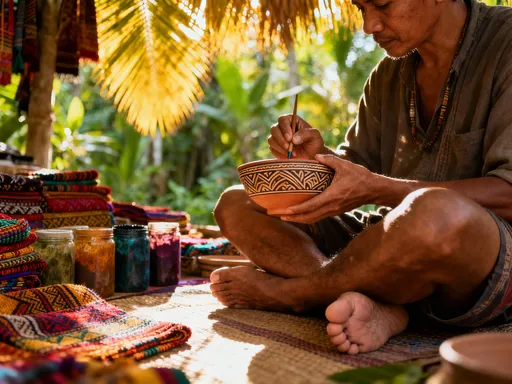
In Tulum, art is not just something you buy—it’s something you live. Many visitors discover that the most meaningful souvenirs aren’t objects at all, but experiences. Workshops offer the chance to paint with natural pigments, weave on backstrap looms, or carve soapstone under the guidance of Maya elders. These sessions are not performances for tourists; they are genuine invitations to learn. You’ll sit on the ground, feel the texture of raw materials, and make mistakes—just as apprentices have done for generations.
One of the most popular experiences is the natural dye workshop, where participants extract color from plants, insects, and minerals. You might crush cochineal bugs to produce a deep red, simmer avocado pits for soft pink, or ferment indigo leaves to create rich blue. The process is slow and meditative, a reminder that true color comes from patience and care. When you leave with a dyed scarf or cloth, it’s not just a product—it’s a testament to what you’ve learned, a piece of memory woven into fiber.
Beyond workshops, Tulum’s art scene thrives in pop-up galleries and open studio nights. In converted jungle cabins or beachfront palapas, artists display their latest works—paintings, sculptures, installations that reflect the spirit of the region. These events are intimate, often accompanied by live music or poetry. They create spaces where travelers and locals can connect, where stories are shared over fresh coconut water and homemade tortillas. In these moments, art becomes a bridge—a way to understand a culture not through observation, but through participation.
And that’s the real value of Tulum’s creative culture: it invites you to go deeper. It challenges the idea that travel is about collecting things. Instead, it suggests that the most lasting souvenirs are the ones you carry in your heart—the memory of a woman teaching you to weave, the scent of indigo in the air, the sound of a storyteller’s voice under the stars. When you return home, you may not have the biggest bag of trinkets, but you’ll have something richer: a deeper appreciation for the people, the land, and the traditions that make Tulum so extraordinary.
Shopping with Soul: A Guide to Mindful Choices in Tulum
As you explore Tulum’s shops and markets, a simple question can guide your choices: Who made this, and how? This question shifts the focus from price and appearance to people and process. It encourages you to look beyond the surface and consider the story behind the object. Is the cotton organic? Was the wood sustainably sourced? Did the artisan receive fair pay? These may seem like small details, but together, they define the integrity of what you’re buying.
One of the best ways to ensure authenticity is to buy directly from artisans. Look for signs that say “hecho a mano” (handmade) or ask if the seller is the creator. Many artists are happy to show you their workspace or explain their technique. If you’re unsure, observe the craftsmanship—handmade items often have subtle variations that machine-made products lack. The stitching might be uneven, the shape slightly asymmetrical, the color layered with depth. These are not flaws; they are signs of humanity.
Another important step is to ask about materials. Natural fibers like cotton, hemp, and agave are more sustainable than synthetic alternatives. Jewelry made from recycled metals or ethically sourced stones has a lower environmental impact. And when artists use reclaimed wood or sea glass, they’re not only reducing waste but also giving new life to what already exists. By choosing these materials, you support practices that protect the environment and honor tradition.
Paying a little more is often worth it. While a $10 necklace might seem like a bargain, it likely comes at a high human and ecological cost. In contrast, a $50 piece made by a local artisan ensures that a family can eat, a child can go to school, and a craft can survive another generation. Your purchase becomes an act of solidarity, a small but meaningful contribution to a more just and beautiful world. In Tulum, where so much is created with intention, your spending can reflect the same.
Tulum doesn’t just sell art—it shares stories, sustains traditions, and invites travelers to take part in something meaningful. In a world of fast fashion and fleeting trends, this corner of Mexico reminds us that every object can carry intention. When you shop here, you're not just buying a keepsake—you're helping keep culture alive.