Hiking Hungary’s Hidden Trails with a Side of Lake-Side Paprika Magic
You know that feeling when you're hiking through quiet hills, the wind in your hair, and suddenly—your nose catches the smell of something sizzling with paprika? That was me, totally unprepared, on the trails above Lake Balaton. This isn’t just a lake. It’s a flavor-packed adventure where every uphill climb earns you a down-to-earth reward: smoky sausages, fresh trout, and village kitchens that feel like home. I never expected hiking here would taste this good. Nestled in western Hungary, Lake Balaton stretches across the landscape like a shimmering ribbon, the largest lake in Central Europe and a quiet treasure often overlooked by travelers rushing to more famous destinations. But for those who take the time to explore its hills, vineyards, and village paths, it offers something rare: a journey where movement and nourishment go hand in hand, where every step brings you closer not just to nature, but to the heart of Hungarian life.
Why Lake Balaton Is a Hiker’s Secret Playground
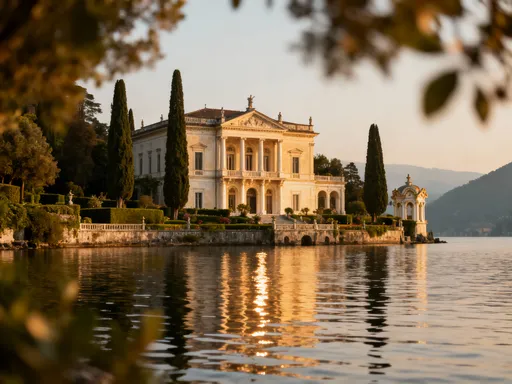
Lake Balaton is more than a scenic body of water—it is a living landscape shaped by ancient volcanoes, glacial movements, and centuries of agricultural tradition. Spanning over 60 kilometers in length and up to 14 kilometers wide, it rests in the Transdanubian region of western Hungary, a gentle arc of freshwater cradled by rolling hills and fertile valleys. What makes this destination especially appealing to hikers is its remarkable diversity. While many visitors come for sunbathing and boating, those who venture beyond the shoreline discover a network of trails that wind through vineyards, orchards, and forested ridges, offering panoramic views of the lake and the surrounding countryside.
The northern shore, in particular, stands out for its dramatic topography. Here, the remnants of extinct volcanoes create rugged terrain that challenges even experienced hikers. Badacsony Hill, rising over 400 meters, offers steep ascents and rewarding vistas, while the Tihany Peninsula features gentler slopes and historic abbeys tucked among lavender fields and apple orchards. The southern shore, flatter and sunnier, is ideal for families and casual walkers, with paved paths and shaded groves lining the waterfront. This range of difficulty ensures that every hiker, from beginners to seasoned trekkers, can find a route suited to their pace and interest.
Accessibility enhances the appeal. Located less than two hours by train or car from Budapest, Lake Balaton is easily reached without the need for international flights or complex logistics. Yet despite its proximity to the capital, it retains a sense of tranquility and authenticity often missing in more commercialized European destinations. Villages like Balatonfüred, Keszthely, and Révfülöp maintain their traditional charm, with stone cottages, local markets, and rhythms dictated by seasons rather than tourist seasons. This off-the-beaten-path atmosphere invites immersion, encouraging travelers to slow down, listen to the rustle of grape leaves in the breeze, and savor the quiet moments between destinations.
Moreover, the region's microclimate contributes to its unique character. Warm winds from the south meet cooler air from the hills, creating ideal conditions for viticulture and fruit growing. The volcanic soil, rich in minerals, nurtures some of Hungary’s finest white wines, including Olaszrizling and Furmint. Hikers pass through terraced vineyards where gnarled vines climb sun-drenched slopes, and in autumn, the air carries the sweet scent of ripening grapes. This harmony between land and livelihood makes hiking here more than a physical pursuit—it becomes a sensory exploration of place, history, and sustenance.
The Best Hiking Routes with Food-Fueled Endpoints
One of the most rewarding aspects of hiking around Lake Balaton is the natural pairing of exertion and nourishment. Trails are often designed—either by design or tradition—with a meal at the end, turning each journey into a pilgrimage toward flavor. Three routes, in particular, exemplify this blend of natural beauty and culinary satisfaction: the Tihany Peninsula loop, the Badacsony Volcanic Ridge hike, and the path from Balatonfüred to Tihany.
The Tihany Peninsula loop is a moderate 7-kilometer trail that begins in the village of Tihany and circles the narrow strip of land jutting into the lake. The path starts gently, winding through fragrant herb gardens and past the 11th-century Tihany Abbey, whose twin spires rise against the sky like sentinels of history. As the trail climbs toward the western tip, hikers are rewarded with one of the most iconic views in Hungary—the entire expanse of Lake Balaton stretching to the horizon, framed by distant hills. The effort is modest, with an elevation gain of about 120 meters, making it accessible to most fitness levels. At the end of the hike, just a short walk from the abbey, lies a family-run csárda where the kitchen fires are always burning. Here, visitors can enjoy halászlé, the famous fisherman’s soup made with freshwater perch, onions, and generous amounts of paprika. Served in deep bowls with crusty bread, it is the kind of meal that warms both body and spirit after a morning on the trail.
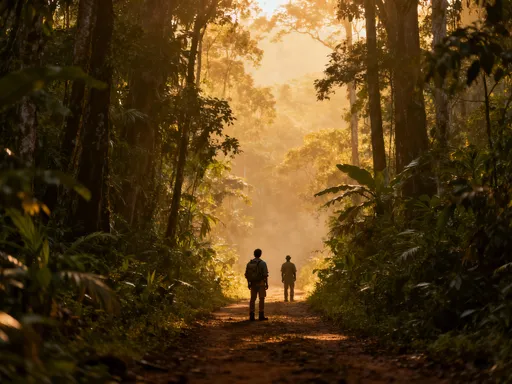
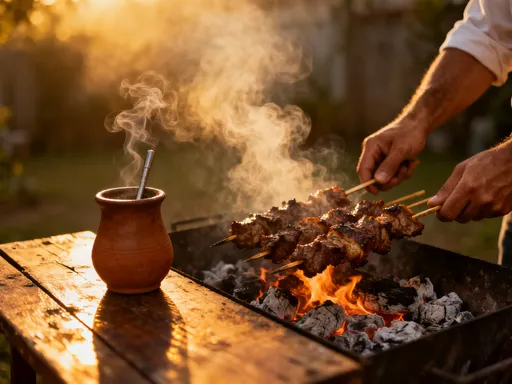
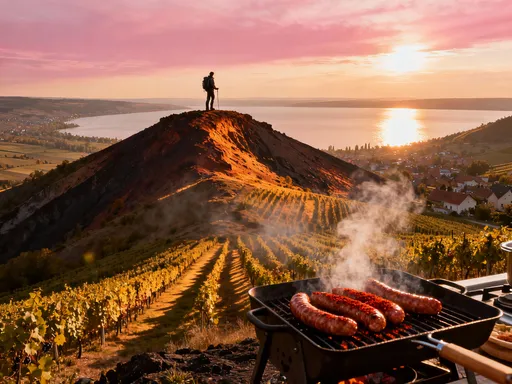
For those seeking a greater challenge, the Badacsony Volcanic Ridge hike offers a steeper, more dramatic experience. Starting from the village of Badacsonylábdi, this 10-kilometer out-and-back route ascends through dense forest before emerging onto basalt columns formed over 8 million years ago. The trail gains nearly 300 meters in elevation, with rocky steps and exposed sections that require attention and steady footing. But the effort is repaid with sweeping views of the lake and the surrounding volcanic cones, including Szent György Hill and Gulács Mountain. At the summit of Badacsony, a historic lookout tower provides a 360-degree panorama, perfect for pausing and catching your breath—both literally and figuratively. Just below the peak, a small winery with an open-air terrace serves grilled kolbász, homemade pickles, and glasses of crisp local wine. The sausages, smoked over beechwood and seasoned with caraway and paprika, are a regional specialty, best enjoyed with a cold drink as the sun begins to dip behind the hills.
The third route, less traveled but equally satisfying, connects Balatonfüred to Tihany by footpath. At approximately 12 kilometers one way, it can be done as a full-day hike or broken into segments with a boat ride back across the lake. The trail follows the northern shoreline, passing through shaded pine groves, secluded coves, and small vineyards where farmers wave from between the rows. The terrain is mostly flat, with occasional inclines, making it suitable for hikers of all ages. What sets this route apart is its rhythm—it unfolds slowly, allowing time to notice details: the call of a kingfisher over the water, the scent of wild thyme crushed underfoot, the sound of church bells drifting from a distant village. Upon reaching Tihany, hikers are greeted by a cluster of outdoor kitchens and garden restaurants. One standout is a lakeside grill that serves fresh Balaton trout, simply pan-fried with butter and lemon, accompanied by a cold potato salad dressed with sour cream and dill. Eating here, with your feet in the grass and the water lapping nearby, feels like participating in a centuries-old ritual of rest and replenishment.
Taste of the Region: How Food Tells the Story of Lake Balaton
To understand the cuisine of Lake Balaton is to understand the land itself. Every dish reflects the geography, climate, and cultural layers that have shaped this region over centuries. The lake provides fish—perch, pike, catfish—that form the base of hearty stews and grilled specialties. The volcanic soil yields grapes, apples, and herbs that infuse both food and drink with distinctive flavors. And the people, influenced by centuries of Austro-Hungarian and Ottoman rule, have developed a culinary tradition that balances richness with freshness, spice with simplicity.
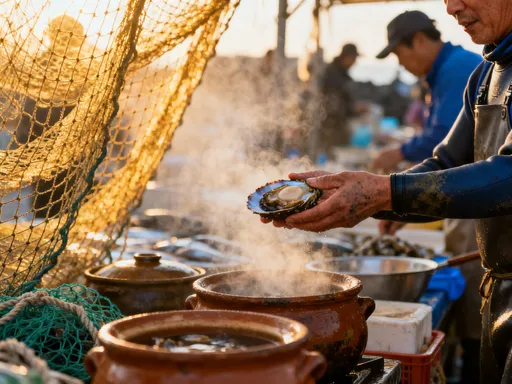
Paprika is perhaps the most iconic ingredient, not just a seasoning but a symbol of Hungarian identity. Grown in the sun-drenched fields south of the lake, it is dried, ground, and used in varying degrees of heat and sweetness. In the kitchen, it transforms dishes—turning soups deep red, coloring sausages golden brown, and adding warmth to slow-cooked stews. Halászlé, the fisherman’s soup, relies on paprika for both flavor and hue, simmered with onions, tomatoes, and lake fish until the broth reaches a velvety consistency. It is traditionally cooked in a cauldron over an open fire, a method that enhances its smoky depth. Eating it at a village csárda, where the recipe has been passed down through generations, is not just a meal but a connection to tradition.
Another staple is kolbász, the smoked sausage that appears at nearly every outdoor meal. Made from pork, seasoned with paprika, garlic, and marjoram, and slowly smoked over fruitwood, it is both a protein source and a flavor enhancer. Sliced thin on a wooden board or grilled until the edges crisp, it pairs perfectly with pickled vegetables, fresh bread, and local wine. Equally important is the use of sour cream, known locally as tejföl, which cools the heat of paprika and adds richness to sauces and soups. Dishes like paprikás csirke (chicken paprikash) rely on this creamy balance, simmered until the sauce clings to tender pieces of meat.
Seasonality plays a crucial role in the region’s food culture. In spring, fogás (pike-perch) is celebrated in festivals and family meals, often served whole with a squeeze of lemon. Summer brings fresh produce—tomatoes, cucumbers, peppers—that are chopped into salads or stuffed and baked. Búzasaláta, a wheat salad with vegetables and herbs, is a common sight at picnics and roadside stands. Autumn is harvest time, when grapes are turned into wine and apples into pálinka, a fruit brandy that warms the throat on cool evenings. Even winter has its culinary rhythm, with stews and baked goods sustaining families through the colder months. This deep connection between food and season ensures that every meal feels timely, rooted in the natural cycle of the land.
Hidden Eateries Only Hikers Know About
While guidebooks list the popular restaurants in Balatonfüred or Siófok, the true culinary gems are often found off the map—places known only to locals and those who walk the trails. These hidden eateries are not marked with neon signs or listed on tourist websites. They appear unexpectedly: a cottage with a wood-fired grill, a vineyard hut with a folding table under a grape arbor, or a farmhouse where a grandmother serves soup from a cast-iron pot.
One such spot lies along the trail between Csobánc and Szent György Hill. Tucked behind a row of walnut trees, a small stone building with a thatched roof operates only during the summer months. Run by an elderly couple, it has no official name, no menu, and no electricity. But on warm afternoons, the scent of grilling lángos fills the air. This deep-fried flatbread, typically topped with sour cream and cheese, is here served with a twist—fresh garlic, chopped dill, and a sprinkle of paprika. The owners cook over an open fire, using dough made from local flour and lard rendered from their own pigs. There is no phone number, no website—only word of mouth and the luck of passing by at the right time. Yet for those who find it, the experience is unforgettable: a simple meal, shared in silence except for the crackle of the fire and the distant call of a cuckoo.
Another hidden gem is a winery on the slopes of Somló Hill, accessible only by footpath. This ancient volcanic cone produces some of Hungary’s most mineral-rich wines, and the family that tends the vines also runs a small tasting room. Visitors are invited to sit on wooden benches shaded by chestnut trees, where they are served slices of cured ham, hard cheese, and homemade pickles alongside samples of dry Furmint and Juhfark. The owner, a retired schoolteacher, speaks little English but communicates through gestures and smiles, pouring wine with quiet pride. There is no charge for the tasting—only the expectation that you linger, savor, and perhaps buy a bottle to take home. These moments of unscripted hospitality are what make hiking in this region so special: they cannot be booked or scheduled, only discovered through effort and openness.
What unites these places is their authenticity. They do not cater to mass tourism. Many are cash-only, closed on Mondays, or open only during harvest. Some require knocking on a door or asking permission to enter private land. But this very inaccessibility preserves their charm. They exist not for profit, but for tradition, community, and the simple joy of sharing food with travelers who have earned their meal. For the hiker, finding such a place feels like a small victory—a reward not just for distance covered, but for curiosity pursued.
What to Pack: The Hiker’s Gourmet Survival Kit
Preparing for a hike around Lake Balaton involves more than just sturdy shoes and a water bottle. Given the emphasis on food as both fuel and experience, a thoughtful packing list can enhance the journey. The ideal hiker’s kit blends practicality with culinary curiosity, ensuring comfort on the trail and readiness for unexpected meals.
A lightweight, sealable container is essential—not for carrying food in, but for bringing leftovers back. Many roadside kitchens serve generous portions, and the idea of taking home a slice of grilled sausage or a spoonful of stew is both economical and nostalgic. A small spice pack, including a vial of Hungarian paprika, allows travelers to add authentic flavor to simple meals or snacks. Even a reusable cup can be useful, especially when stopping at a stand that serves borsófőzelék, a creamy pea soup often sold in disposable bowls. Bringing your own cup reduces waste and signals respect for local customs.
For snacks on the trail, pogácsa—savory scones made with cheese, bacon, or herbs—are widely available at village bakeries and roadside stalls. Lightweight, filling, and flavorful, they are the perfect energy boost between villages. Dried fruit, particularly apricots and plums from local orchards, provides natural sugar and fiber. Some hikers also carry a small block of hard cheese wrapped in wax paper, which holds up well in warm weather. Pair these with a crusty roll bought in the morning market, and you have a picnic that tastes of the region.
Other useful items include a compact first-aid kit, a detailed trail map (as phone signals can be spotty in remote areas), and a small notebook to record favorite dishes or names of places worth revisiting. A phrasebook with basic Hungarian expressions—especially “Köszönöm” (thank you), “Egy pohár bort, kérem” (a glass of wine, please), and “Hol van a mosdó?” (where is the bathroom?)—goes a long way in building goodwill. These small preparations do not weigh you down, but they enrich the experience, turning each stop into a meaningful interaction.
Navigating Culture: Etiquette, Timing, and Local Rhythms
Understanding the local way of life is as important as knowing the trail map. In rural Hungary, daily rhythms are shaped by agriculture, weather, and tradition. Many small eateries, especially those run by families, close between 2 p.m. and 5 p.m. for a long midday break, reopening in the evening. Some operate only on weekends or during the summer months. Public transportation, while reliable between major towns, may not serve remote trailheads frequently. Hikers who plan without considering these patterns risk arriving at a closed kitchen or missing the last bus back.
The solution is simple: start early. A morning departure ensures you reach high-elevation viewpoints by midday and arrive at food stops during lunch hours. It also allows time to explore villages before shops close. Additionally, checking local event calendars can reveal seasonal festivals—fish fairs, wine tastings, harvest celebrations—that temporarily transform quiet towns into bustling hubs of activity. These events often feature open-air cooking, live music, and opportunities to meet locals, adding depth to the journey.
Politeness and respect are equally important. While Hungarians may seem reserved at first, they respond warmly to effort and sincerity. A simple greeting, a nod, or a request made in broken Hungarian can open doors. If a trail passes through private vineyards or orchards, it is courteous to ask permission before entering. In many cases, the owner will not only grant access but invite you to taste a grape or sample a homemade liqueur. These spontaneous exchanges, born of mutual respect, are among the most memorable parts of the trip.
Why This Journey Stays With You
Long after the blisters have healed and the trail maps have been tucked away, the memories of hiking around Lake Balaton linger—not just as images, but as tastes, scents, and feelings. It is the warmth of the sun on your shoulders as you descend into a village, the sound of a spoon clinking against a soup bowl, the sight of the lake turning gold at sunset. These moments are not staged or sold; they are lived, earned through each step taken and each hill climbed.
What makes this journey different from ordinary sightseeing is its depth. Seeing a view is one thing; earning it through physical effort makes it meaningful. Eating a meal is enjoyable; sharing it with people who grew the food, raised the animals, and preserved the recipes makes it sacred. This combination of movement and nourishment creates a rhythm that resonates long after the trip ends. It reminds us that travel is not just about collecting places, but about engaging with them—through our bodies, our senses, and our relationships.
And so, the invitation stands: lace up your boots, fill your pack, and set out on the hidden trails of Lake Balaton. Let the wind guide you, the scents lead you, and the promise of a paprika-scented meal pull you forward. Explore not just with your eyes, but with your appetite. Because the best journeys are not just seen—they are tasted, felt, and remembered in the quiet moments when you sit, full and content, watching the water catch the last light of day.