Sky-High Wonders and Street-Level Magic: Rotterdam’s Architecture Will Blow Your Mind
Ever thought a city could feel like a living art gallery? Rotterdam does exactly that. Once rebuilt from ruins, it's now a fearless playground of bold shapes, glass curves, and industrial grit. I walked its streets, neck craned skyward, discovering how architecture here doesn’t just fill space—it tells stories. From floating homes to market halls glowing like jewels, every corner shouts innovation. This is not just sightseeing; it’s inspiration on foot. The city’s skyline pulses with energy, each structure a statement of resilience and imagination. More than any guidebook can capture, Rotterdam invites you to look up, look close, and see how design shapes not only skylines but also the rhythm of daily life.
A City Reborn in Steel and Glass
Rotterdam’s architectural identity was forged in fire and determination. In May 1940, German bombing reduced much of the city center to rubble, wiping out centuries of history in a matter of hours. Yet from this devastation emerged not a longing for the past, but a bold vision for the future. While other Dutch cities like Amsterdam and Utrecht preserved their historic cores, Rotterdam chose a different path—one of reinvention. Rather than rebuild in traditional styles, city planners and architects embraced modernism, seeing the blank slate as an opportunity to design a city unbound by convention. This decision marked the beginning of a unique urban experiment that continues to evolve today.
One of the earliest symbols of this new direction was the Lijnbaan, opened in 1952. As Europe’s first purpose-built pedestrian shopping street, it represented a radical shift in urban planning. With its clean lines, open plazas, and separation of foot and vehicle traffic, the Lijnbaan set a precedent for postwar city design across the continent. Though some criticized its starkness over time, its influence is undeniable. It signaled that Rotterdam would not simply restore, but re-imagine how people move through and experience a city. The mindset was clear: functionality and forward-thinking design would guide the city’s rebirth.
Equally emblematic of this spirit are the Cube Houses, or Kubuswoningen, designed by architect Piet Blom in the 1980s. Tilting at a 45-degree angle atop concrete pillars, these yellow, cube-shaped homes appear to grow from a hexagonal “forest” structure. Blom envisioned them as a metaphor for urban living—individual homes standing together like trees in a forest, balancing community and privacy. While unconventional, the cubes have become one of Rotterdam’s most beloved landmarks, drawing visitors who marvel at their ingenuity. Inside, the homes are surprisingly livable, with multi-level layouts that make clever use of space. They stand as a testament to Rotterdam’s willingness to embrace architectural risk.
This culture of innovation did not emerge overnight. It was nurtured by a city government open to collaboration with architects, engineers, and urban thinkers. Municipal support for experimental design created an environment where creativity could thrive. Over decades, this ethos attracted international talent and positioned Rotterdam as a global laboratory for urban development. The city didn’t just rebuild—it redefined what a city could be.
The Icons You Can’t Miss (And Why They Matter)
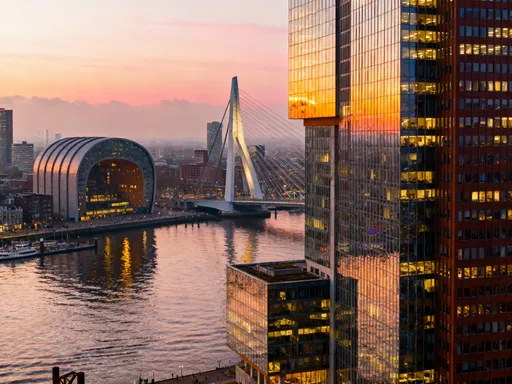
No visit to Rotterdam is complete without encountering its architectural icons, each one a chapter in the city’s ongoing story of innovation. Dominating the skyline is the Erasmus Bridge, affectionately known as “The Swan” for its elegant, sweeping pylon that rises 139 meters above the Nieuwe Maas River. Completed in 1996, the bridge is more than a vital transport link between north and south; it is a sculptural centerpiece that defines the city’s modern identity. At night, its illuminated cables create a striking silhouette, visible from nearly every corner of the city center. The bridge symbolizes connection—not just of land, but of past and future, tradition and boldness.
Equally iconic is the Markthal, a horseshoe-shaped structure that redefined what a market could be. Opened in 2014, this monumental building houses over 100 food stalls, apartments, and parking, all beneath a vast, curved roof. But what truly captivates visitors is its interior: a soaring 40-meter-high arch covered in a vibrant, panoramic artwork called “Horn of Plenty” by Arno Coenen. The image, featuring giant fruits, flowers, and insects, transforms the space into a cathedral of color and abundance. More than just aesthetic appeal, the Markthal represents a fusion of public space, commerce, and residential life—a model of mixed-use urban design that cities worldwide now study.
Another landmark that draws global attention is the Rotterdam Central Station, redesigned and expanded in 2014. Its futuristic, wave-like roof appears to float above the platforms, supported by a delicate lattice of steel and glass. The station is not only one of the busiest in the Netherlands but also a hub of seamless mobility, integrating trains, trams, buses, and bicycles. Its open, light-filled concourse encourages movement and connection, reflecting Rotterdam’s emphasis on accessibility and flow. The design, by architects Benthem Crouwel, prioritizes clarity and efficiency, proving that functional infrastructure can also be beautiful.
These structures do more than impress—they shape daily life. The Erasmus Bridge reduces commute times and opens new neighborhoods to development. The Markthal revitalized a former industrial zone into a bustling social heart. Central Station serves over 110,000 passengers daily, linking people to jobs, education, and culture. Each icon is a case study in how visionary architecture can serve both practical needs and collective inspiration. They are not monuments to be admired from afar, but living parts of the city’s pulse.
Hidden Gems Beyond the Postcards
While the skyline grabs attention, some of Rotterdam’s most compelling architecture lies off the beaten path. In the Katendrecht neighborhood, once a red-light district and port area, old warehouses have been transformed into lofts, cafes, and cultural spaces. The area’s industrial bones—exposed brick, steel beams, and weathered facades—are preserved and celebrated, giving it a raw, authentic character. De Doktoren, a row of converted dockmaster houses, now hosts design studios and small galleries, reflecting the city’s commitment to adaptive reuse. Katendrecht shows that beauty can emerge from overlooked corners when creativity and care are applied.
Another quiet standout is the Museumpark, a green oasis surrounded by architectural excellence. Here, the Netherlands Architecture Institute (NAI), the Kunsthal, and the Chabot Museum stand in thoughtful dialogue with one another. Designed by Rem Koolhaas’s OMA, the Kunsthal is a layered composition of ramps, galleries, and natural light, creating a dynamic experience for visitors. Its asymmetrical form and bold use of materials—concrete, glass, and steel—make it a landmark of late 20th-century design. Unlike grand museums in other cities, the Kunsthal feels approachable, integrated into the park rather than dominating it. It exemplifies how architecture can enhance, rather than overpower, its surroundings.
Perhaps the most groundbreaking recent addition is the Depot Boijmans Van Beun, the world’s first publicly accessible art storage facility. Opened in 2021, its mirrored, bowl-shaped exterior reflects the sky and surrounding park, creating a constantly shifting visual effect. Inside, visitors can walk through glass corridors and see curators at work, storing and restoring artworks in a transparent, climate-controlled environment. The building challenges the traditional idea of a museum by making the “backstage” part of the experience. It reflects Rotterdam’s belief that art, architecture, and public engagement should be inseparable. The depot has quickly become a must-see, not just for art lovers but for anyone interested in innovative design.
These hidden gems reveal a deeper truth about Rotterdam: its architectural strength lies not only in spectacle but in thoughtful integration. The city values function, context, and sustainability as much as form. Whether repurposing old structures or building new ones, the goal is to create spaces that serve people and endure over time. These quieter projects may not dominate postcards, but they are essential to understanding Rotterdam’s holistic approach to urban life.
How to Experience Architecture Like a Local
To truly appreciate Rotterdam’s architecture, one must slow down and engage with the city as a resident does. Locals don’t just look at buildings—they live in them, move through them, and enjoy them. One of the best ways to follow their lead is by bicycle. With over 500 kilometers of dedicated bike paths, Rotterdam is designed for two wheels. Cycling allows you to feel the rhythm of the city, notice subtle design details, and cover more ground than on foot. Rent a bike from one of the many stations and follow routes that connect landmarks with hidden corners. You’ll discover how seamlessly buildings relate to streets, parks, and waterways.
Another local favorite is the architecture boat tour along the Maas River. From the water, the city reveals a different dimension. As you glide past towering skyscrapers, converted cranes, and floating homes, a guide explains the history and design of each structure. These tours, offered year-round, provide context that transforms sightseeing into learning. You’ll hear about the challenges of building on soft soil, the engineering behind flood-resistant designs, and the vision behind sustainable neighborhoods. The river itself is a central character in Rotterdam’s story, and seeing the city from its surface offers a unique perspective on how water shapes urban form.
Coffee culture also plays a role in architectural appreciation. Many of Rotterdam’s best cafes are housed in repurposed spaces—a shipping container at the Witte de Withstraat, a former gas station in the Oude Westen, or a glass pavilion in the park. Sitting with a drink in one of these spots allows you to experience design at human scale. You can touch the materials, feel the light, and observe how people interact with the space. Places like Kop van Zuid or Café De Vlieger are not just about the brew but about the atmosphere created by thoughtful design. These moments of pause make the architecture personal.
For a deeper dive, consider joining a walking tour led by a local architect or urban planner. These guided experiences go beyond facts and dates, offering insight into design principles, material choices, and city planning decisions. You’ll learn why certain buildings lean, how green roofs work, or what makes a public square feel inviting. Some tours focus on specific themes—sustainability, housing innovation, or postwar reconstruction—allowing you to tailor the experience to your interests. These interactions foster a sense of connection, turning abstract structures into stories of human ingenuity.
Materials, Colors, and the Urban Palette
Rotterdam’s architecture is not only defined by shape but by texture, tone, and tactile quality. The city’s material choices tell a story of pragmatism and artistry. Concrete, steel, and glass dominate, but not in a cold or impersonal way. Instead, these materials are used with intention—polished, colored, or combined to create warmth and character. The result is an urban palette that feels both modern and human.
Color plays a surprisingly vital role. The Markthal’s interior, with its vivid orange and red hues, creates a sense of abundance and energy. In contrast, the Cube Houses’ bright yellow exteriors stand out against gray skies, injecting cheer into the streetscape. Even smaller details—blue bike lanes, green rooftops, red public benches—add layers of visual interest. These choices are not arbitrary; they are part of a citywide design strategy to make public spaces more inviting and legible. Color guides movement, defines zones, and lifts the spirit.
Texture is equally important. In the harbor areas, weathered steel and rusted metal reflect the city’s industrial roots. In newer developments, smooth glass and polished concrete offer a sleek contrast. Some buildings, like those in the Stadshaven district, use recycled materials and exposed structures to celebrate honesty in construction. You can see the bolts, pipes, and beams—not hidden, but highlighted as part of the aesthetic. This transparency in design mirrors Rotterdam’s broader values: clarity, resilience, and openness.
Light, too, is a key material. Architects design with the Dutch sky in mind—often overcast, sometimes brilliant. Large windows, skylights, and reflective surfaces maximize natural illumination. In winter, this helps combat darkness; in summer, it reduces energy use. The interplay of light and shadow gives buildings a dynamic quality, changing throughout the day. Walking through the city at different times reveals new facets of familiar structures, proving that architecture is not static but alive.
Sustainability Woven Into Design
Innovation in Rotterdam extends beyond aesthetics to environmental responsibility. The city has long been a leader in sustainable urban development, integrating green principles into its architecture from the ground up. This is not an afterthought—it is a core part of the design philosophy. From energy-efficient buildings to circular construction methods, Rotterdam demonstrates how cities can grow without compromising the planet.
One standout example is the concept of energy-positive buildings—structures that generate more power than they consume. The Edge Olympic, an office building in the Zuid district, uses solar panels, smart climate systems, and energy storage to achieve this goal. Its design maximizes natural light and ventilation, reducing the need for artificial heating and cooling. Employees benefit from a healthier, more productive workspace, while the building contributes surplus energy to the grid. This model is being replicated across the city, proving that sustainability and comfort can go hand in hand.
Rooftop farms and green roofs are also widespread. The Dakakker on Stadionplein is one of Europe’s largest urban farms, growing vegetables, herbs, and honey-producing bees on a rooftop. It supplies local restaurants and educates the public about urban agriculture. Green roofs like this help insulate buildings, manage stormwater, and support biodiversity. They turn unused spaces into productive, ecological assets. The city incentivizes such projects through subsidies and regulations, encouraging developers to build not just upward, but greener.
Perhaps the most ambitious project is Schoonschip, a floating neighborhood in the IJsselmeer. Comprising 46 homes on pontoons, the community is entirely energy-neutral, powered by solar panels and connected to a smart energy grid. Houses are built with sustainable materials and designed for minimal environmental impact. Residents share resources, from boats to tools, fostering a strong sense of community. The neighborhood is a prototype for climate-resilient living, showing how cities can adapt to rising water levels. It reflects Rotterdam’s forward-thinking approach: anticipating challenges and designing solutions before they become crises.
Why Rotterdam Changes How You See Cities
Rotterdam does more than showcase impressive buildings—it shifts perspective. After walking its streets, visiting its markets, and crossing its bridges, one realizes that architecture is not just about form, but about vision. The city teaches that urban spaces can be both functional and inspiring, practical and poetic. It challenges the idea that cities must choose between history and progress, showing instead that reinvention can honor the past while embracing the future.
For travelers, especially those who care about community, sustainability, and quality of life, Rotterdam offers a powerful message: cities can be designed with purpose. Every building, park, and bike path reflects choices—choices to prioritize people, innovation, and resilience. This is not accidental; it is the result of decades of thoughtful planning, public engagement, and architectural courage.
More than any single landmark, it is this holistic approach that leaves a lasting impression. Rotterdam proves that a city can evolve without losing its soul. It invites visitors to look beyond the surface, to question how their own communities are shaped, and to imagine what could be. In a world facing urbanization, climate change, and social transformation, Rotterdam stands as a beacon of possibility. It doesn’t just inspire awe—it inspires action. And that is the true mark of transformative architecture.