How I Found Calm in Just 10 Minutes a Day — My Simple Yoga & Meditation Routine
Have you ever felt too stressed to even start a workout? I’ve been there. Two years ago, burnout left me exhausted and unfocused. Then I discovered a gentle, no-pressure routine blending yoga and meditation—rooted in traditional Chinese wellness principles. It wasn’t about perfect poses or emptying my mind. It was about showing up, breathing, and moving slowly. Within weeks, my sleep improved, my mood stabilized, and I felt more present. This isn’t a miracle—it’s consistency. Here’s how this simple daily habit changed my life, and how you can start it too—no experience needed.
The Burnout Breakthrough: Why Simplicity Wins in Wellness
Two years ago, life felt like a treadmill set too high. As a mother of two and a part-time office administrator, my days were packed with responsibilities. I was constantly on the move—preparing meals, managing schedules, meeting deadlines—yet emotionally, I felt stuck. Fatigue became my default state. I’d lie in bed at night, mentally replaying the day’s to-do list, unable to shut off my thoughts. Even weekends offered no real rest. I tried high-intensity workouts, hoping to ‘sweat out’ the stress, but they left me more drained. What I needed wasn’t more effort—it was restoration.
That’s when I began exploring gentler approaches to wellness. I came across the concept of mind-body harmony, a cornerstone of Traditional Chinese Medicine (TCM). Unlike Western models that often treat physical and emotional health separately, TCM views the body and mind as deeply interconnected. When one is out of balance, the other follows. The goal isn’t to push harder, but to restore flow—particularly the flow of Qi, or vital energy. This perspective shifted my understanding of self-care. Instead of chasing intensity, I started looking for balance, for moments of stillness, for practices that invited presence rather than performance.
What I discovered was that simplicity supports sustainability. Many wellness routines fail not because they lack value, but because they demand too much too soon. Hour-long yoga classes, complex meditation techniques, or strict dietary changes can feel overwhelming, especially when you’re already stretched thin. The irony is that the people who need self-care the most often feel they have the least time for it. A simple, accessible routine removes that barrier. It doesn’t require special equipment, a quiet house, or a lot of time. It just asks you to show up for yourself, consistently, in small ways.
Research supports this approach. Studies in behavioral psychology show that habits built on minimal effort and low friction are more likely to stick. The key isn’t duration or intensity—it’s regularity. Doing a short practice every day creates a ripple effect. Over time, these small actions accumulate into meaningful change: better sleep, reduced anxiety, improved focus. The body begins to recognize these moments as signals of safety, triggering the parasympathetic nervous system—the ‘rest and digest’ mode. This isn’t about achieving perfection. It’s about creating a daily rhythm of care that fits your life, not fights against it.
Yoga Meets TCM: A Natural Fit for Modern Life
When I first explored yoga, I associated it with flexibility and complex poses. I imagined twisting my body into pretzel-like shapes, something that felt out of reach for someone with stiff shoulders and tight hips. But as I learned more, I realized that yoga, at its core, is about alignment—between breath and movement, body and mind, effort and ease. This philosophy aligns closely with Traditional Chinese Medicine, which emphasizes the smooth flow of Qi through pathways called meridians. When Qi is blocked or stagnant, discomfort arises—physically and emotionally. Gentle movement, like that found in beginner yoga, helps release these blockages and restore balance.
In TCM, each organ system is connected to a specific meridian, and these meridians run through the body like rivers of energy. Physical tension, emotional stress, or poor posture can disrupt the flow, leading to symptoms like fatigue, irritability, or digestive issues. Yoga postures—especially slow, mindful ones—act like gentle currents that help clear the channels. For example, a simple forward bend can release tension along the back and spine, areas where stress often settles. Raising the arms overhead stretches the chest and shoulders, opening the heart meridian, which in TCM is linked to emotional well-being.
Unlike high-intensity workouts that activate the sympathetic nervous system—the ‘fight or flight’ response—gentle yoga encourages the opposite. It signals the body that it’s safe to slow down. This shift is crucial for recovery, especially for women in midlife who may be managing hormonal changes, caregiving demands, or career pressures. The slow rhythm of breath-coordinated movement lowers heart rate, reduces muscle tension, and improves circulation. It’s not about burning calories; it’s about restoring vitality. This kind of movement is particularly beneficial for those with joint sensitivity, limited mobility, or chronic fatigue, as it builds strength and flexibility without strain.
One of the most powerful aspects of this approach is its accessibility. You don’t need to be flexible or athletic to benefit. In fact, the less flexible you are, the more you may gain. The practice meets you where you are. A slight bend in the knees during a forward fold, a seated version of a standing pose—these modifications honor your body’s limits while still supporting energy flow. Over time, with consistent, gentle practice, the body naturally becomes more supple, not because of force, but because of repeated, mindful engagement. This is healing in motion—quiet, patient, and deeply effective.
Meditation Without the Pressure: Letting Go of “Clearing the Mind”
When I first tried meditation, I assumed I was failing. My mind raced with thoughts—what to cook for dinner, an email I forgot to send, a conversation I wished I’d handled differently. I thought the goal was to stop thinking, to achieve complete mental silence. But the more I tried to ‘clear my mind,’ the more frustrated I became. It wasn’t until I learned that meditation isn’t about stopping thoughts, but about noticing them without judgment, that everything changed. The practice isn’t about perfection—it’s about presence.
Traditional Chinese Medicine views stillness not as passivity, but as an active form of healing. Just as rest allows the body to repair, mental stillness allows the mind to reset. In TCM, the heart houses the Shen, or spirit. When the Shen is scattered—due to overstimulation, stress, or lack of sleep—emotional imbalance follows. Meditation helps gather the Shen, bringing it back to center. This doesn’t require hours of sitting in silence. Even a few minutes of focused attention can create a sense of calm and clarity.
There are several accessible forms of meditation that don’t require special training. Focused breathing, for instance, involves paying attention to the natural rhythm of your breath. When your mind wanders, you gently bring it back—without scolding yourself. This act of returning, again and again, strengthens mental resilience. Another effective method is the body scan, where you slowly direct your attention from the toes to the head, noticing sensations without trying to change them. This practice enhances body awareness and helps release stored tension. Mindful listening—focusing on ambient sounds, like birdsong or the hum of a refrigerator—can also anchor the mind in the present moment.
For beginners, starting with just three to five minutes is enough. The key is consistency, not duration. Choose a quiet spot, sit comfortably, and use your breath as an anchor. When thoughts arise, imagine them as clouds passing through the sky—acknowledge them, then let them drift away. Over time, this practice trains the brain to respond rather than react to stress. Neuroimaging studies show that regular meditation increases activity in the prefrontal cortex, the area responsible for decision-making and emotional regulation, while reducing activity in the amygdala, the brain’s fear center. This means you’re not just feeling calmer—you’re becoming more resilient at a neurological level.
My 10-Minute Daily Plan: Real Routine, Real Results
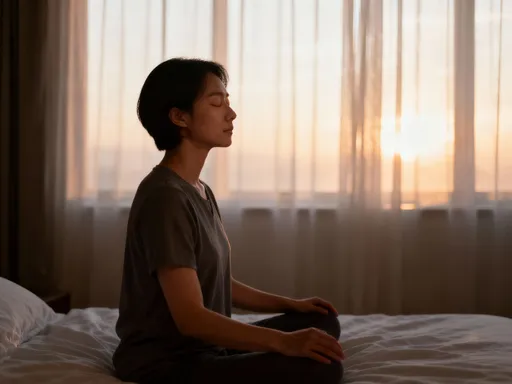
The routine I developed is simple by design. It takes just ten minutes—five for gentle yoga, five for seated meditation—and can be done anytime, though I prefer mornings before the household wakes up. I start by sitting on a folded blanket or cushion, feet flat on the floor, spine tall but relaxed. I take three deep breaths, inhaling through the nose, exhaling slowly through the mouth, to signal the body that it’s time to begin.
The yoga portion includes three foundational movements. First is Cat-Cow, done on hands and knees. On the inhale, I arch my back, lifting my head and tailbone (Cow Pose); on the exhale, I round my spine, tucking my chin and pelvis (Cat Pose). This gentle flow warms up the spine and encourages deep breathing. I repeat this for about two minutes, syncing each movement with my breath. Next is Standing Forward Bend. I rise to stand, feet hip-width apart, and on an exhale, hinge at the hips to fold forward. I let my head hang heavy, hands resting on the floor or shins. This pose releases tension in the back and hamstrings and encourages blood flow to the brain, which helps with mental clarity.
The third movement is Arms-Raising Breath. I stand tall, arms at my sides. On a slow inhale, I raise my arms overhead, palms facing each other. On the exhale, I lower them back down. I repeat this five to six times, focusing on the expansion of the chest and the rhythm of the breath. This movement stimulates the lungs and opens the upper body, counteracting the slouched posture many of us develop from sitting at desks or looking at screens.
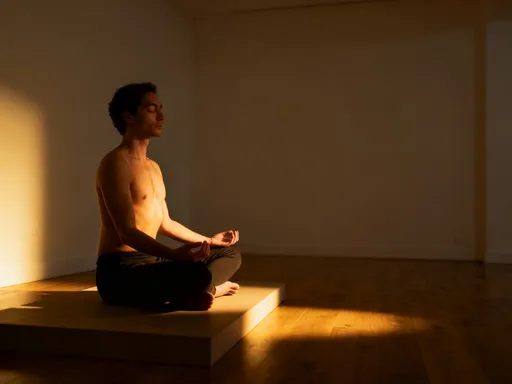
After the yoga, I return to a seated position for five minutes of meditation. I use diaphragmatic breathing—inhaling deeply into the belly, allowing it to rise, then exhaling slowly, drawing the navel toward the spine. I focus on the sensation of the breath at the nostrils or the rise and fall of the abdomen. When thoughts arise, I acknowledge them and return to the breath. I don’t aim for silence; I aim for awareness. This short session sets a calm tone for the day, helping me respond to challenges with more patience and clarity. On evenings when I feel restless, I do the same routine before bed, which often leads to deeper, more restful sleep.
Science Behind the Simplicity: What Research Says
The benefits of short, daily yoga and meditation practices are supported by a growing body of scientific evidence. Multiple studies have shown that even brief sessions can significantly reduce cortisol, the primary stress hormone. One 2018 study published in the Journal of Clinical Psychology found that participants who practiced just ten minutes of mindfulness meditation daily for eight weeks reported a 30% reduction in perceived stress levels. Another study from Harvard Medical School demonstrated that regular meditation increases gray matter density in brain regions associated with memory, self-awareness, and emotional regulation.
Sleep quality also improves with consistent practice. Research from the University of Southern California found that older women who engaged in gentle yoga three times a week experienced fewer nighttime awakenings and felt more rested upon waking. The combination of physical relaxation and mental quieting appears to regulate the body’s circadian rhythms, making it easier to fall and stay asleep. For women navigating perimenopause or menopause, this can be especially valuable, as hormonal fluctuations often disrupt sleep patterns.
Emotional regulation is another well-documented benefit. A meta-analysis published in JAMA Internal Medicine reviewed over 40 clinical trials and concluded that mindfulness meditation programs show moderate evidence of improving anxiety, depression, and pain. The effects were comparable to those of antidepressant medications in some cases, but without the side effects. Importantly, these benefits were observed with relatively short daily practices—ranging from five to twenty minutes—suggesting that even small investments of time can yield meaningful returns.
Experts in integrative health emphasize the importance of sustainability. Dr. Eva Selhub, a mind-body medicine specialist, notes that ‘the most effective wellness practices are the ones you can maintain over time.’ She advocates for ‘micro-moments’ of mindfulness—brief pauses throughout the day to check in with the breath or body. These moments, though small, help rewire the brain over time through neuroplasticity, the brain’s ability to adapt and form new neural connections. This means that with regular practice, calmness and clarity become more accessible, not just during meditation, but in everyday life.
Overcoming Common Barriers: Time, Doubt, and Discomfort
One of the most common reasons people don’t start a wellness practice is the belief that they don’t have time. But when broken down, ten minutes is less than 1% of a 24-hour day. It’s one episode of a sitcom, half a social media scroll, or less than two songs on a playlist. The real issue isn’t time—it’s priority. By framing these ten minutes as non-negotiable self-care, like brushing your teeth or locking the front door, it becomes easier to protect. Many women find success by attaching the practice to an existing habit—doing it right after waking up, before brewing coffee, or after putting the kids to bed.
Physical discomfort is another barrier. If kneeling or sitting on the floor is uncomfortable, use a chair. Place a cushion under your sit bones for support, or keep your knees bent during forward bends. Yoga is not about achieving a certain look—it’s about feeling better. Listen to your body. If a movement causes pain, stop. Modify. Honor your limits. Over time, with gentle repetition, flexibility and strength will improve, but the goal is not to ‘get better’ at yoga—it’s to feel more at ease in your body.
Mental resistance is perhaps the most subtle but powerful obstacle. You might feel bored, skeptical, or frustrated, especially in the beginning. These feelings are normal. The mind resists change, particularly when it involves stillness. Instead of fighting these thoughts, acknowledge them. Say to yourself, ‘I notice I’m feeling impatient,’ or ‘This feels silly, and that’s okay.’ The practice isn’t about eliminating doubt—it’s about learning to be with it without reacting. Over time, this builds emotional resilience.
Creating environmental cues can also strengthen consistency. Choose a dedicated spot—a corner of the bedroom, a quiet nook in the living room—and keep your mat or cushion there. Practice at the same time each day, if possible. This builds a habit loop: same time, same place, same action. Within a few weeks, your body and mind will begin to anticipate the routine, making it easier to show up, even on busy or stressful days.
Making It Yours: How to Build a Personalized, Sustainable Practice
The most important principle in building a lasting practice is flexibility. This isn’t about following a rigid script, but about creating a routine that serves you. Some days, you may have more energy and want to extend the yoga portion. Other days, you may need rest—on those mornings, five minutes of seated breathing may be enough. The goal is not to meet a standard, but to meet yourself where you are.
Tracking progress can be helpful, but not in a perfectionist way. Instead of measuring how long you meditated or how deep you folded, try journaling briefly about how you felt before and after. Did you feel calmer? More centered? Even a simple check-in—‘Today I showed up’—can reinforce commitment. Some women find it helpful to note changes in sleep, mood, or energy over time. These small observations can be powerful motivators.
Incorporating seasonal awareness, as taught in TCM, can also enhance your practice. In winter, when energy naturally turns inward, focus on restorative poses and longer breaths. In spring, when energy rises, incorporate more gentle twists and side bends to support liver function and emotional release. This cyclical approach aligns your practice with natural rhythms, making it feel more intuitive and sustainable.
Remember, wellness is not a destination. It’s a daily return—to your breath, your body, your center. It’s about showing up with kindness, even when you don’t feel like it. You don’t need to be perfect. You don’t need to master every pose or silence your mind completely. You just need to begin. Start small. Stay consistent. Let calm grow. Over time, these ten minutes will become a sanctuary—a quiet space in your day where you remember who you are, beyond the roles and responsibilities. That, more than any pose or breath, is the true heart of the practice.
This journey isn’t about mastering advanced poses or achieving enlightenment. It’s about reclaiming small moments of peace in a chaotic world. By combining the gentle wisdom of TCM with accessible yoga and meditation, anyone can build a practice that fits their life—not disrupts it. The power lies not in duration or intensity, but in daily return. Start small. Stay consistent. Let calm grow.